Guides · Templates and calculators
What do I need to sort out before I make money from product recommendations as a creator?
To earn regularly from recommendations in Germany, you usually sort out six things first: register a trade (Gewerbeanmeldung) and, within a month, send the tax registration questionnaire via ELSTER, deciding on the small business scheme. Then add an Impressum (legal notice) under § 5 DDG, a ready-made affiliate disclosure line, a receipts folder, a look at the programmes’ terms and, before your first payout, billing details with tax number and bank account.
By the wyrld team · Last updated: · 10 min read
Mainly for creators with around 10,000 followers or more and their agencies: paste a product link, wyrld creates the affiliate links. Free for creators.
Six steps, starting with the questionnaire
The tax office only issues your tax number (Steuernummer) once it has processed the tax registration questionnaire (Fragebogen zur steuerlichen Erfassung). Yet an invoice or credit note for your work normally has to show exactly that tax number or your VAT ID (§ 14(4) no. 2 UStG; for small business owners (Kleinunternehmer, § 19 UStG), that is under the small business scheme, § 34a UStDV). That is why the questionnaire comes first. Your Impressum and disclosure line should be in place before you post your first link; your billing details are needed before your first payout at the latest.
- Trade and tax: register your trade with your local trade office when you start, and within a month of starting send the questionnaire to the tax office via ELSTER, the tax authorities’ online portal. This is also the point to choose for or against the small business scheme. If your work is freelance (freiberuflich) rather than a trade, you do not register a trade, but you still notify the tax office, again via the questionnaire (§ 138(1) sentence 3 and (1b) AO).
- Impressum: § 5(1) DDG requires one for digital services offered on a commercial basis, usually for payment. Create a page with your name, the address where you are established and details that let people contact you quickly online, including your email address. If you have a VAT ID (USt-IdNr.) or a business ID number (Wirtschafts-Identifikationsnummer), add it, and if you are entered in the commercial register, the register and your registration number (§ 5(1) nos. 4 and 6 DDG). A GmbH, activities that need an official licence and professions with a professional chamber have to give further details under § 5. Everything must be easy to recognise and directly accessible, so link the page with a clear label in your profile.
- Disclosure: write one fixed line for your bio, video descriptions and Stories that explains what the asterisk on your links means. For affiliate links, the German media authorities (Medienanstalten) recommend an asterisk on the link and an explanation right next to it. If the link comes from a brand partnership or leads to a shop out of commercial interest, such as the shop link in your bio, add “Werbung” or “Anzeige” (advertisement), for example “Anzeige: Mein Shop*”. According to the Medienanstalten, a general note in your bio saying your profile contains ads is not enough.
- Receipts: set up a folder from day one, digital or on paper. It holds credit notes and statements from programmes, invoices for your expenses, business emails such as those about brand partnerships, and a list of products you receive for promotion and may keep, with their usual retail price less usual discounts.
- Programmes: read the terms before you sign up, even if you are already in other programmes. Check the payment model (per click or per sale), the minimum payout and any exclusivity clause. Then come the entry conditions, such as minimum age, business status (some programmes only accept businesses) or a minimum follower count. If you work with an agency, also check if it may use your account.
- Billing details: have your name, address, tax number, your status under the small business scheme and a bank account ready. A separate account just for this income and spending keeps your records clearer.
Where the rules are and which deadlines apply
| Item | Legal basis | Deadline or rule |
|---|---|---|
| Register the trade | § 14(1) GewO | at the same time as you start |
| Tax registration questionnaire | § 138(1b) and (4) AO | within one month, online |
| Small business scheme | § 19 UStG | up to €25,000 in the previous year and €100,000 in the current year |
| Legal notice | § 5 DDG | always available, easy to find |
| Make advertising recognisable | § 5a(4) UWG, § 6(1) DDG, § 22(1) MStV | clearly recognisable, per post (Medienanstalten) |
| Keep records | § 147(3) AO | receipts 8, books and records 10, business letters 6 years |
Retention periods start at the end of the calendar year in which the document was created (§ 147(4) AO). A credit note from March 2026 therefore has to be kept until at least the end of 2034.
What often gets missed besides the tax number
- Free products count. If you may keep a product after promoting it, you record its value as income, according to the Hessian tax authority, at the usual retail price less usual discounts. The same goes for the regular value of a service you get in return for promotion, such as a hotel stay. The Berlin tax authorities mention exceptions, for example if you have to send the product back, it is of very low value or the brand pays the tax for you. Their advice, given three times over: “Dokumentieren” (document it).
- Discount codes are advertising. According to the Medienanstalten, “Werbung” or “Anzeige” goes right next to the code, and the conditions must be easy to access and stated clearly and unambiguously (§ 6(1) no. 3 DDG). So have the validity period and minimum order value to hand before you post your first code.
- Based on the questionnaire, the tax office can set advance payments on the tax it expects (Hessian tax authority’s guide). For income tax they are due on 10 March, 10 June, 10 September and 10 December (§ 37(1) EStG). Money you set aside from your first payout makes these dates easier to plan for.
- In your first year, the small business scheme uses the €25,000 limit, not the €100,000 one (Hessian tax authority’s guide). If you opt out of the scheme, you are bound by that choice for at least five calendar years (§ 19(3) UStG).
Checklist and free products log to copy
Start checklist
Creator start checklist (as of October 2026, general overview, not a substitute for advice)

☐ Trade registered with the trade office on: ____ (or freelance work notified to the tax office)
☐ Tax registration questionnaire sent via ELSTER on: ____ (no later than one month after starting)
☐ Small business scheme: yes / no
☐ Tax number received: ____
☐ Impressum online: name, address, email address, VAT ID or business ID number if any, commercial register and number if registered
☐ Impressum linked in profile: Instagram / TikTok / YouTube
☐ Link disclosure saved, for example for the shop link in your bio: Anzeige: Mein Shop*, below it *Affiliate-Links: Ich verdiene je nach Shop an Klicks oder Käufen, dein Preis bleibt gleich. (Advertisement: My shop* / *Affiliate links: I earn from clicks or purchases depending on the shop, at no extra cost to you.)
☐ “Werbung” or “Anzeige” planned for brand partnerships and discount codes
☐ Discount code conditions to hand: valid until, minimum order value
☐ Receipts folder set up: credit notes, invoices, business emails, free products
☐ Programme terms read: per click or per sale, payout, exclusivity, age, business status, followers
☐ With an agency: its own login instead of your password, commission share agreed in writing
☐ Billing details entered: name, address, tax number, status, payout account
☐ Advance payment dates noted (10 Mar, 10 Jun, 10 Sep, 10 Dec), money set aside for tax
Free products and services log (for a spreadsheet, separated by semicolons)
Date; brand; product or service; usual retail price less usual discounts; kept (yes/no); post with link
12 Nov 2026; Example brand; lipstick, shade 03; €29.99; yes; Reel from 15 Nov 2026 (example row)
How it works on wyrld
On wyrld, two items on the list get shorter. For the programmes step, you read wyrld’s creator terms but do not sign up with any network yourself: you paste a product link, wyrld recognises the product and variant, looks for the same item in over 90,000 partner shops and creates the affiliate link for each offer it finds. Your community sees the offers found with prices side by side and buys wherever it likes, directly at the shop and at no extra cost. You earn per click, per sale or both, depending on the shop. The creator terms do not require exclusivity, so wyrld runs alongside programmes you already use. wyrld is built mainly for creators with reach, from around 10,000 followers, and for talent agencies; for some profiles, the team looks at the channels before the storefront goes live. wyrld is free for creators.
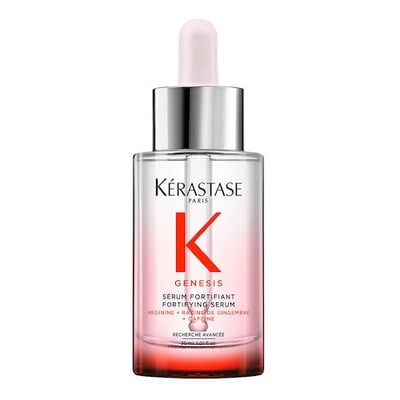
Kérastase
Genesis Sérum Anti-chute Fortifiant, 30 ml
Shared by Sillemma, Selin & 7 others


- Flaconi Best price€19.96 €665.33 / 1 l
- Douglas€21.99 €733.00 / 1 l
- Sephora€26.95 €898.33 / 1 l
Prices on 8 Nov 2026. Compare prices · 7 shops → More in Sillemma’s shop →
For billing details, wyrld asks for what you bring from step one: your name or company name, address, country, tax status with tax number or VAT ID, and your payout details. On wyrld you can sign up even without a registered business; before your first payout we ask for your tax number and VAT status. You do not write an invoice: wyrld settles at the start of the following month with a self-billing credit note, paid out from €5, which you find under “Billing” in your dashboard and can file straight into your receipts folder.
If you work with an agency, it gets its own account and dashboard on wyrld, opens your storefront from there and works on your products and profile with you. You both see the same numbers. You confirm your billing details once yourself; after that the agency can no longer change them. If you agree a commission share between 0 and 100%, wyrld deducts it from your earnings at the monthly settlement, and the agency gets its own credit note for it. Brands can also pay for campaigns through wyrld Boost, in which many creators take part at once and are paid according to KPIs set in advance. You decide yourself if you join. Labelling your posts is up to you; videos from such a campaign are labelled as advertising.
Frequently asked questions.
Do I have to register a trade before I earn my first euro?
Germany’s Trade Regulation Act requires notice at the same time as you start (§ 14(1) GewO), not when the first money arrives. The Berlin and Hessian tax authorities treat regular activity aimed at profit as business income; according to Berlin, intending to earn more than you spend is enough. Check with your tax adviser what applies to you.
Do I also have to keep emails with brands?
Yes, if they serve as a business letter or accounting record. § 147(1) AO covers business letters received and copies of those sent, and the tax authorities expressly include emails with that function (GoBD, para. 121). Keep business letters for six years, accounting records such as credit notes for eight (§ 147(3) AO). If an email only carries an invoice and says nothing else relevant for tax, keeping the invoice is enough.
Can I keep credit notes and invoices in digital form only?
Yes, § 147(2) AO allows this if it follows the principles of proper bookkeeping. A scan must match the paper original visually, and the files must stay available for the whole retention period, readable without delay and machine-analysable. A subfolder per calendar year helps, because the retention periods start at the end of a year.
Can I join several affiliate programmes at the same time?
Yes, unless one of them requires exclusivity, which its terms would state; wyrld’s creator terms do not. For the small business scheme limits, what counts is not each programme but your total turnover: the sum of your taxable supplies as a business, based on payments received and minus certain tax-exempt supplies (§ 19(2) UStG). Your tax adviser can tell you which income belongs in it, for example from programmes based abroad.
What requirements do affiliate programmes have?
Each programme sets its own and looks at more than followers. Stylink’s terms (as of August 2026, read on 22 October 2026) require full legal capacity, a minimum age of 18 and that only you can use your account (§ 2(10)), with payouts from €25 in Germany, Austria and Switzerland. Per its help pages, Amazon Associates Germany only reviews an application after three sales in the first 180 days, own orders excluded.
Last updated:
Sources
This page explains the legal position in general terms and is not a substitute for tax or legal advice. Check what applies to you with your tax adviser. Accessed on :
- Berlin Senate Department for Finance: FAQ for social media creators (in German)
- Hessian Ministry of Finance: guide to the taxation of influencers (June 2026, PDF, in German)
- German Trade Regulation Act (GewO), § 14 (notification)
- German Fiscal Code (AO), § 138 (notifying the start of a business)
- German Fiscal Code (AO), § 147 (retention of records)
- Federal Ministry of Finance: GoBD bookkeeping principles, para. 121 (AO handbook 2025, annex 33, in German)
- German Income Tax Act (EStG), § 37 (advance payments)
- German VAT Act (UStG), § 19 (small business scheme)
- German VAT Act (UStG), § 14 (invoices and self-billing credit notes)
- German VAT Implementing Ordinance (UStDV), § 34a (invoices from small businesses)
- German Digital Services Act (DDG), § 5 (legal notice)
- German Digital Services Act (DDG), § 6 (commercial communication)
- German Act against Unfair Competition (UWG), § 5a
- German Interstate Media Treaty (MStV), § 22
- Die Medienanstalten: guidelines on labelling advertising in online media (May 2025, PDF, in German)
- Stylink: terms for creators (as of August 2026, in German)
- Amazon Associates Germany: application review process (in German)
- German Civil Code (BGB), § 14 (business)